The Art of Being a Student
What music and work have taught me about staying open to learning after gaining experience.
Contents
During group practice, we sometimes grew tired of playing the same piece. We knew it and had played it many times. Our teacher would tell us that we were only just beginning to gain control of it.
We kept going. After more practice, we felt we could play it with our eyes closed.
I often return to that memory when I think about being a student. We wanted to move on, but there was still something to learn in the music we already knew. Listening to our teacher meant giving that possibility more time.
That leaves me with a question: what does it mean to be a good student when I am no longer a beginner?
Staying with a lesson
My teacher used to say that giving a 90% performance meant being 200% prepared. Those numbers were his way of describing how much practice a performance could need. Understanding a piece and being ready to play it well were different points in the work.
The repetition helped me feel that difference. The piece became familiar before my playing became smooth and confident. Our teacher could still hear work to be done in something we felt we already knew.
My teachers also gave me ways to continue that work at home. They encouraged me to record lessons so I could watch and listen again. They suggested practicing in front of a mirror to notice mistakes. These were ways to look at my own playing more closely and return to what they had shown me.
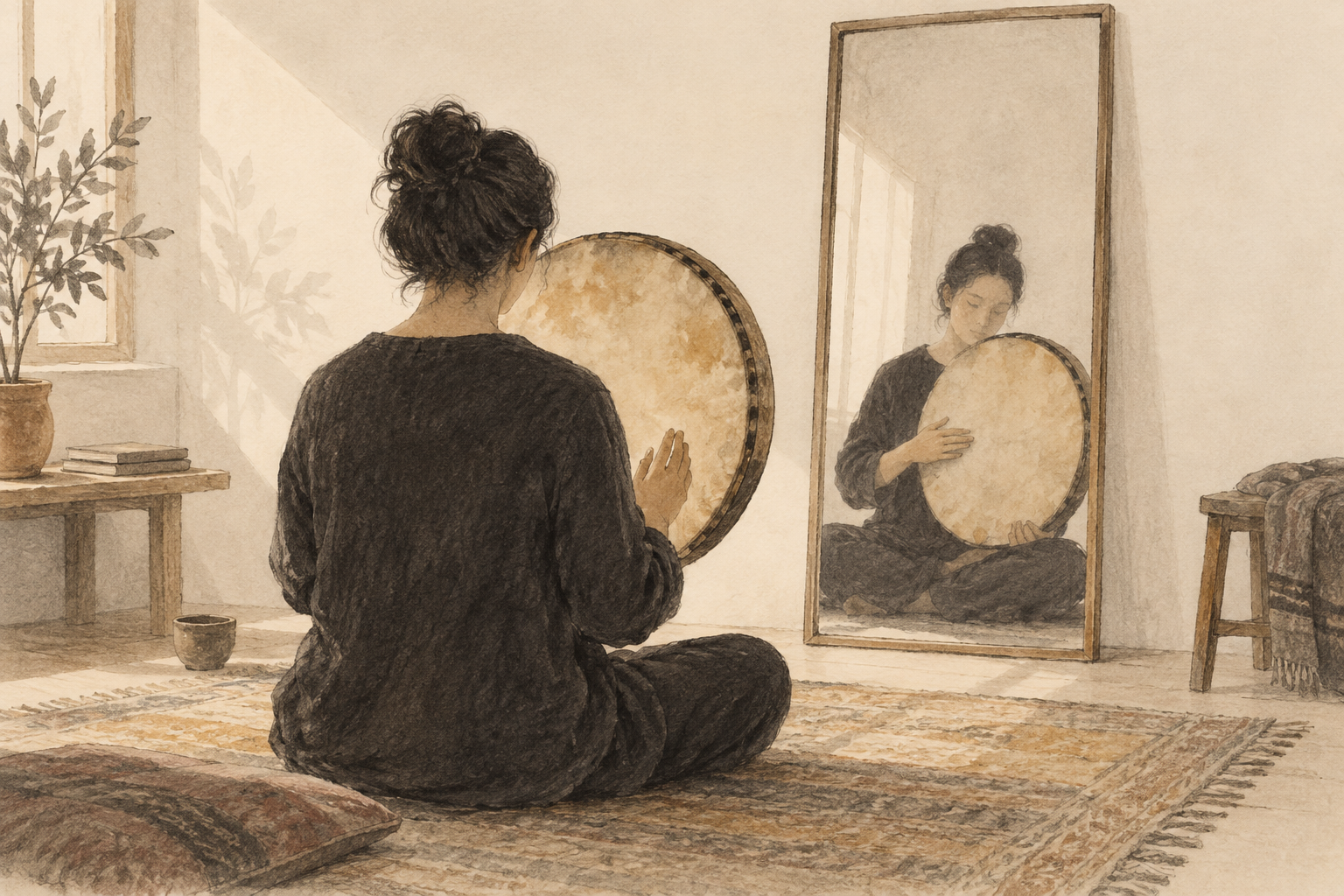
Those ways of practicing gave me something to return to between lessons. I value daily practice, though sometimes I play very little or not at all. I keep my instrument close to make it easier to practice.
Bringing experience into a new lesson
I have changed daf teachers and joined a new group. I have also started learning other instruments. Each time, I brought some experience with me, but there were basics to learn again.
A new instrument gives me unfamiliar things to practice. A new teacher can also help me see something I missed in an instrument I already know. Returning to the basics is part of both experiences, even when I am not starting from the same place.
Hearing a comment about my work
At work, some of my managers have been teachers too. They helped me pay closer attention to how I listened and spoke. I might have heard something wrong, explained myself poorly, or misunderstood what another person meant.
One lesson was that a problem in my work does not have to become a judgment about me as a person. Someone can point out a mistake in what I have done without attacking who I am.
Understanding that difference helps me respond to feedback. I can listen to the comment, check what the person means, and look at the work itself. I do not have to agree with every comment to take time to understand it.
Both my music teachers and my managers have helped me notice something in my work that I had missed. Understanding their point gives me something to try. At work, that can mean checking what someone means before responding. In music, it can mean returning to a piece with a clearer idea of what needs practice.
I remember being tired of that piece, and later feeling we could play it with our eyes closed. Being a student did not end when we knew the music. It was part of how we learned to play it well.